
In order to use the Filter plant calculator to look at the potential size for a filter plant, the user is required to input parameters that encapsulate the dewatering characteristics of a slurry.
In this article, Andrew Vietti of Vietti Slurrytec discusses some of the most important factors that affect the dewaterability and, hence, process and equipment choices and size.
Not all tailings streams are alike, nor, crucially are process waters.
Tailings Type and Dewatering Technology Compatibility
Tailings engineers and dewatering technology providers know from experience and test work that there are groups of tailings which can be dewatered more easily than others. For instance, in a Dry Stacking application, iron ore and typical South American copper tailings tend to filter relatively easily while mineral sands slimes are extremely difficult or impractical to filter. These compatibilities are largely due to differences in the fines content within the tailings, herein defined as the percentage minus 20µm fraction, and the presence of active or swelling clays, herein defined by the Methylene Blue Index (MBI) number in meq/100g solids within the tailings (Kaminsky 2014).
Using these two parameters, tailings can be conveniently grouped according to the ICOLD Bulletin 181 tailings classification system in terms of their ease of dewaterability (Figure 2).
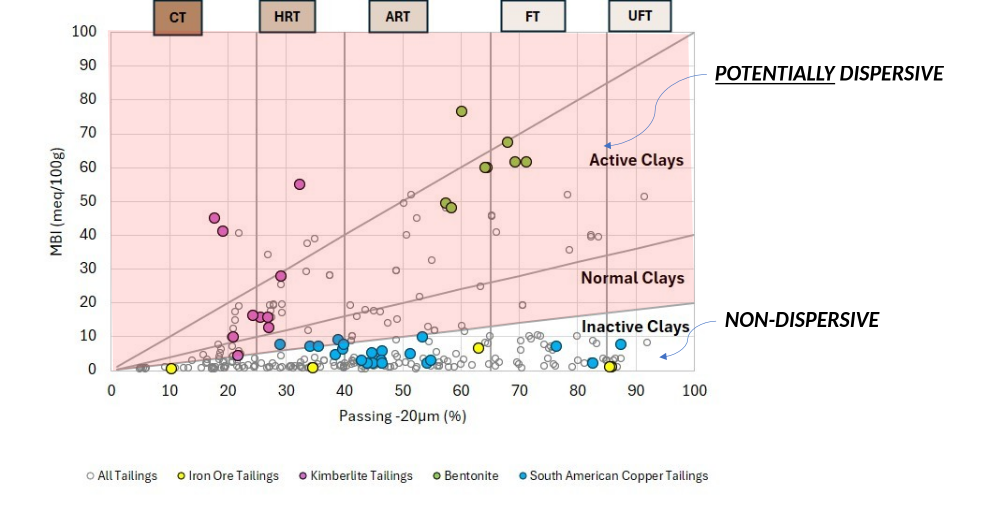 Figure 1 Vietti Slurrytec tailings classification chart based on fines content and clay properties
Tailings having low fines and low active clay content tend to dewater very easily, and at high throughput, to a cake by low pressure technology such as vacuum filtration; tailings with high fines content but low active clay content need higher pressures (chamber or membrane pressure filters) to achieve a cake consistency. However, the presence of active clays makes dewatering by any technology difficult, and almost impossible if the clays are in a dispersive state (Figure 2).
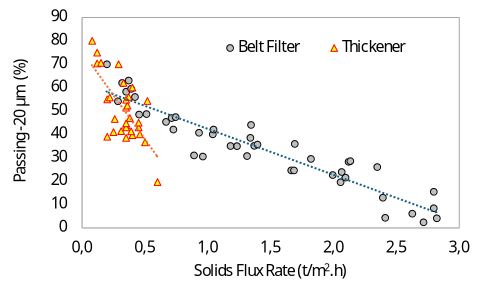 Figure 2 Relationship between dewatering technology solids throughput and tailings fines content
Not all waters are equal
The dispersive potential of active clays within tailings is only expressed when the clays are first exposed to the process water, typically during the milling or scrubbing step. Depending on the chemical properties of the water, the clays will begin to undergo swelling and ion-exchange to mimic the ionic profile of the contacting water. Consequently, the chemical properties of the water and the resulting ion exchanged nature of the clays will affect their dispersive behaviour within the slurry. This behaviour will in turn have a profound effect on the properties of the tailings, from sedimentation and rheological properties in the dewatering circuit through to the consolidation and permeability properties at the TSF (Figure 3).
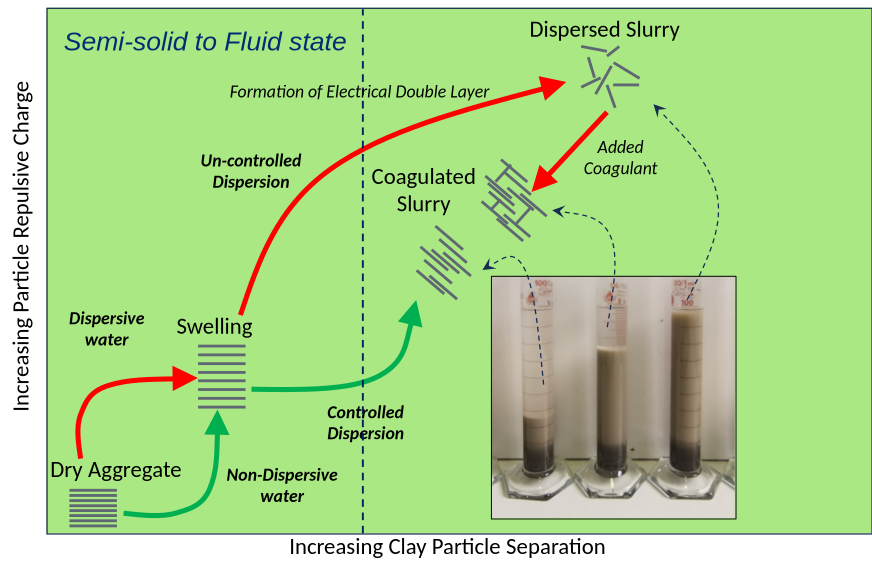 Figure 3 Controlled and un-controlled dispersion of active clays in water (after Rengasamy, 2018)
Two main water chemistry properties affect the dispersive behaviour of active clays in tailings:
- Conductivity (in mS/cm) i.e. the total water-soluble salt content or salinity of the water.
- Sodium Adsorption Ratio (SAR) i.e., the ratio of monovalent sodium ions to divalent calcium and magnesium ions or sodicity of the water.
Using these parameters, tailings process water can be classified into four groups which define the potential for dispersive behaviour of tailings containing active clays (Figure 4).
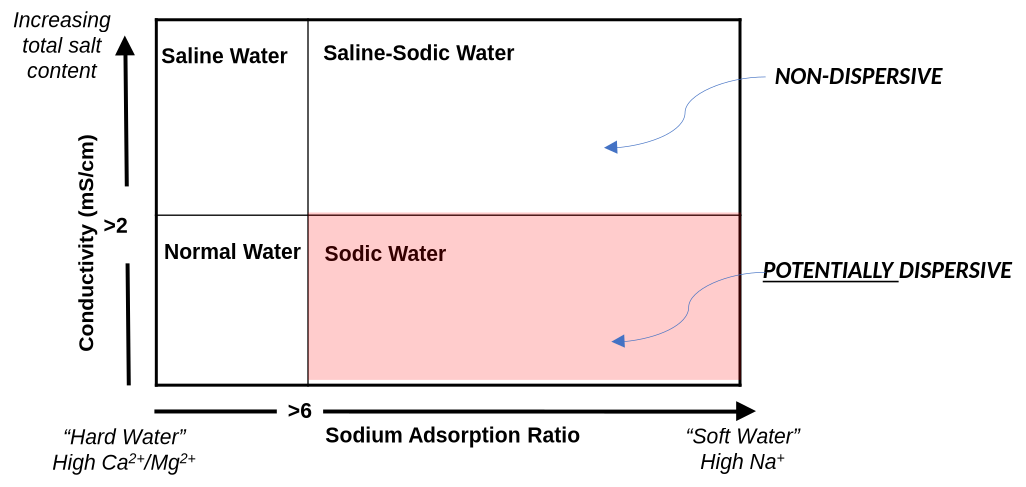 Figure 4 Classification chart for defining potentially dispersive water quality (after Fitzpatrick et al. 1994)
Using both the solids and water classification methods, the dispersive behaviour of the tailings can be defined, and the appropriate dewatering circuit can be designed (Figure 5).
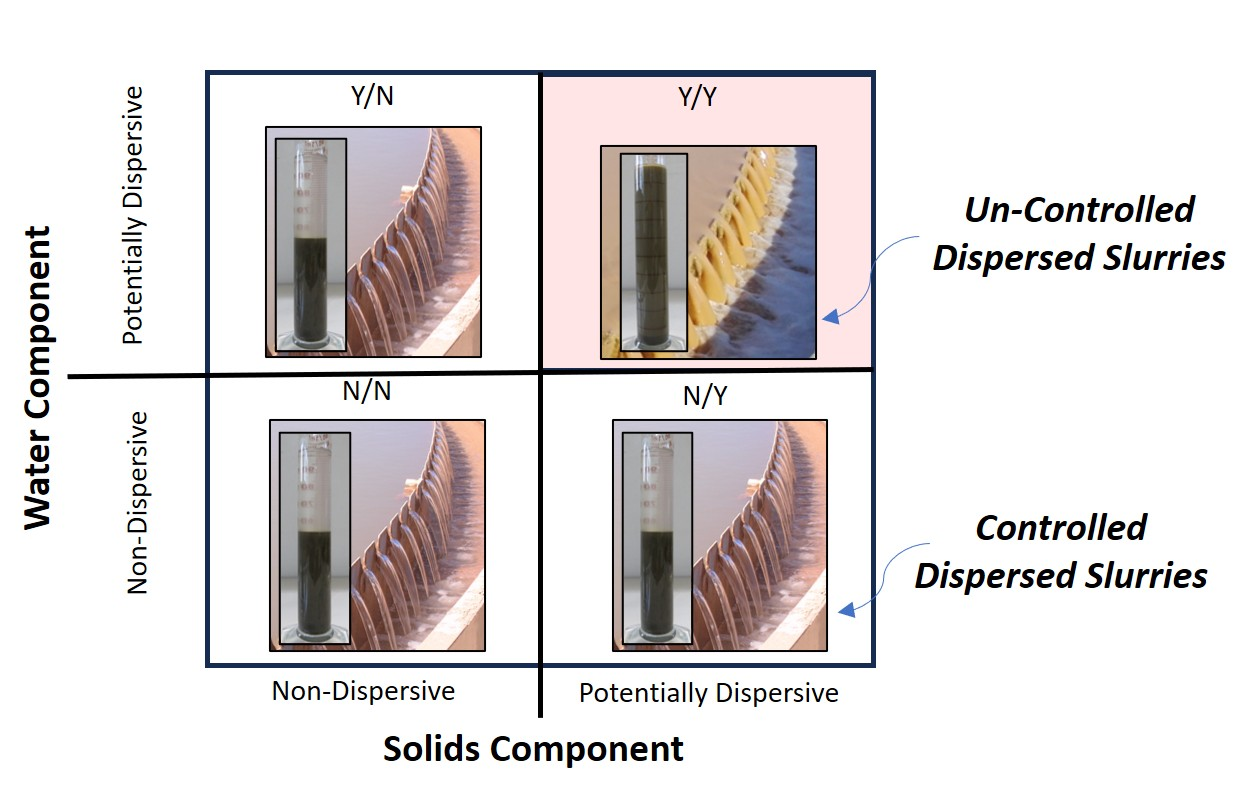 Figure 5 Identifying dispersive and non-dispersive tailings using solids and water properties
How to use what we have learnt
This knowledge provides the Tailings engineer with options to modify the front-end metallurgical process to reduce fines content and/or to modify process water chemistry conditions to suppress clay dispersion so that the appropriate dewatering technology can be implemented and its performance optimised.
References
Kaminsky, H (2014), ‘Demystifying the Methylene Blue Index’, 4th Int Conf. Oil Sands Proceedings.
International Commission on Large Dams (2021), Bulletin 181 Tailings Dam Design Technology Update, Paris.
Rengasamy, P (2018), ‘Irrigation water quality and soil structure stability – A perspective with some new insights’. Agronomy, 8, pp 72-85.
Fitzpatrick, RW, Boucher SC, Naidu R and Fritsch E (1994), ‘Environmental consequences of soil sodicity’ Australian Journal of Soil Research, vol 32, pp 1068-1093.